


In 1996, two talented Stanford graduate students — Larry Page and Sergey Brin — began working together on a search engine project. Just a few years later, their academic experiment would evolve into a company known worldwide as Google — a technological revolution that reshaped life for billions of people.
How It All Began: A Chance Meeting at Stanford and the Birth of an Idea
The two future co-founders met in 1995: Larry had just arrived to begin his master’s program, and Sergey, already a Stanford student, volunteered as a campus guide for newcomers.
According to legend, they disagreed about almost everything during that first tour — constantly debating and challenging each other’s views. Yet despite (or perhaps because of) their different perspectives, Larry and Sergey eventually became friends and joined forces to create what would one day become a global tech giant.
While searching for a dissertation topic, Larry began thinking about the nature of the internet. It wasn’t just a collection of web pages — it was a massive graph. Pages were connected through links, and the structure of these connections could reveal how important a given page might be. Inspired by this idea, he envisioned a system that would analyze backlinks — much like academic citations help determine the significance of a research paper.
Getting Started and Early Challenges
So, in 1996, Larry began developing the project. He built a web crawler — a program designed to automatically scan and catalog web pages. The first “testing ground” for his crawler was his own page on Stanford’s website, from which the program began exploring the wider internet.
Before long, Sergey joined the research. And from this student experiment emerged BackRub — the early prototype of what would eventually become Google. The name captured the core of the algorithm: analyzing “back links” to determine which pages truly mattered. This method set their system apart from anything that existed at the time.
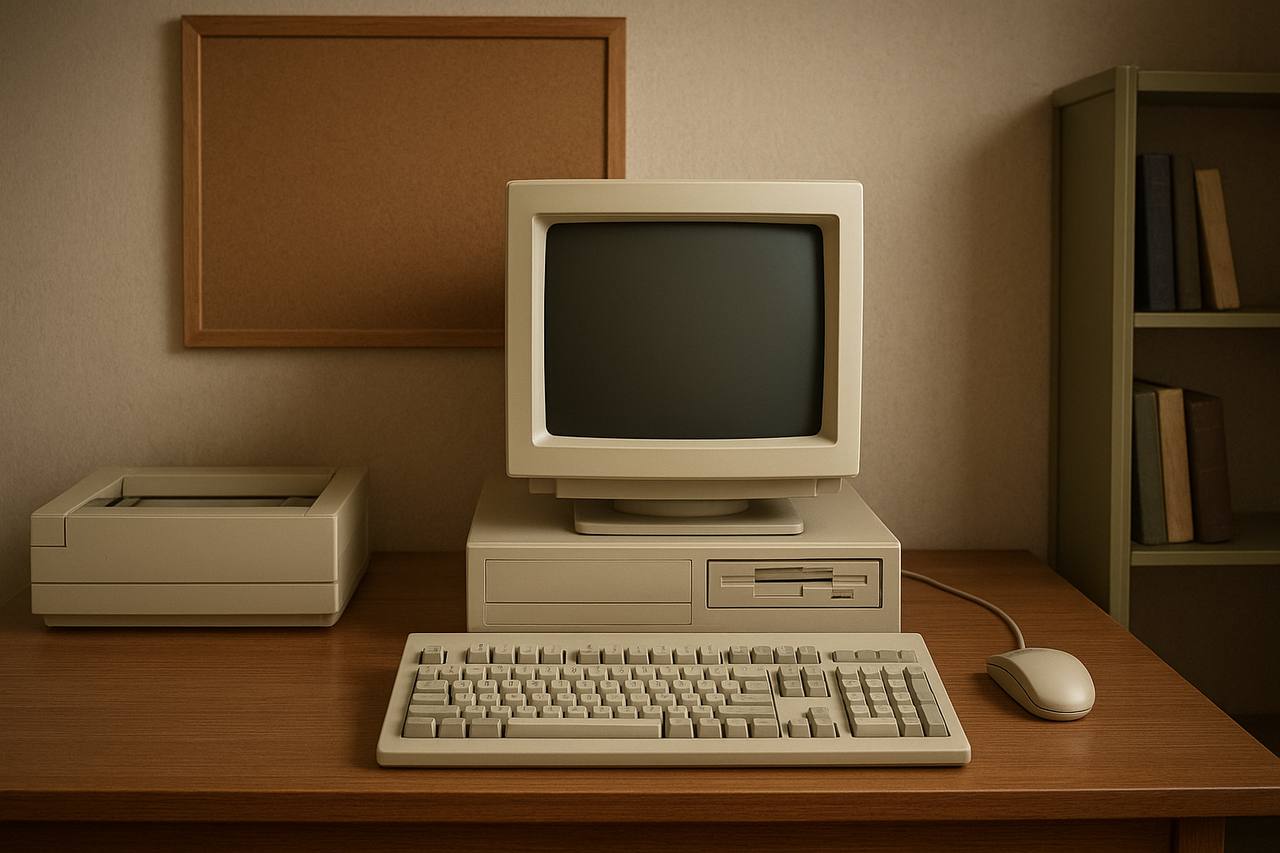
BackRub ran into technical issues almost immediately — the project demanded far more computing power than the students realistically had. But Larry and Sergey didn’t give up. They used whatever they could find: cheap PCs, spare parts, old components. Piece by piece, they built and rebuilt their own hardware right in Stanford’s dorms, turning those small rooms into an impromptu research lab.
It didn’t take long to see that their idea actually worked. BackRub didn’t just search — it ranked results in a way that pushed the most relevant pages to the top. This method of ranking pages based on both the number and the quality of links pointing to them would later be called PageRank. And it was PageRank that became the foundation of the search engine the world would soon know as Google.
How BackRub Became Google
When their friends noticed that the search engine was producing results far better than most existing tools — to the point where people started using it on their own — it became clear that this wasn’t just a class project. It was the beginning of something much bigger.
That’s why, in 1997, they renamed BackRub to Google — a name inspired by the term “googol” (a 1 followed by 100 zeros), reflecting their ambition to organize an almost infinite amount of information on the web.
From that moment on, everything started moving quickly. In August 1998, Andy Bechtolsheim — one of the founders of Sun Microsystems — immediately recognized the potential of their technology and wrote Page and Brin a check for $100,000. That check became the first real capital behind their future company.
By September 1998, Google was officially incorporated as Google Inc. Their “office” wasn’t a polished corporate space but a regular garage in Menlo Park, California — a setting that now sounds like a startup cliché, but in this case, it’s simply the truth. That garage became the birthplace of one of the world’s most influential tech giants.
At first, Google had only a handful of employees — a tiny team working side by side, often right there in the garage. But the work never stopped: they kept refining the algorithm, improving the interface, and expanding the system. And already by 1998–1999, people started to notice that Google delivered search results faster and more accurately than its competitors.
What began as an academic experiment inside a university quickly evolved into a real business with funding, momentum, and a rapidly growing reputation. Google was no longer just a search engine — it was a technological breakthrough.
Google Today: Some Numbers
Today, Google has evolved from a student project into a global tech empire whose services are used by billions of people around the world.
- As of 2025 (including all divisions of parent company Alphabet Inc.), about 185,719 people work for Google worldwide.
- Google has dozens of offices and data centers — its office network spans over 200 cities in more than 50 countries.
- Google still dominates the internet: the share of search queries handled by Google remains extremely high, and the service processes billions of queries every day.
The story of Google is a vivid illustration of how a student idea can develop into a project of global scale.
Conclusion
University is not just about getting a diploma. It’s a space where you can meet like-minded people, tap into valuable resources, experiment — and potentially build something far bigger than just a successful career (which in itself is a pretty good outcome too!).
If you are at the start of your journey and choosing where to study, the Education Explorer team is happy to help you navigate your options and make the best decision. You can learn all the details about our counselling services here.