


Durham University


- University
- College
- Full-time
- Part-time
- Online
- english
About the Durham University
Durham University, officially founded in 1832 by an Act of Parliament, is the third oldest university in England after Oxford and Cambridge. Its creation was an important event that allowed for higher education in Northern England. The University has inherited the centuries-old traditions of learning in Durham, which date back to the monastery school at Durham Cathedral, founded in 1072. The key distinguishing feature of Durham from the very beginning was the collegiate system, similar to Oxbridge, where students belong to both the academic faculty and one of the 17 colleges that are the center of their social and community life. The university's educational philosophy combines academic rigor with the development of a well-rounded personality. The collegiate system promotes the creation of a close, supportive community where students from different disciplines interact with each other. The emphasis is on teaching in small groups (tutors, seminars), developing critical thinking and independent research work. The University prides itself on its strong focus on research that is integrated into teaching already at the undergraduate level. Durham's contribution and reputation are exceptionally high. It is consistently ranked in the top 10 universities in the UK and in the top 100 in the world. In 2024, he was ranked 7th in The Times and Sunday Times Good University Guide and 78th in the world by the QS World University Rankings. Its notable alumni include former British Prime Minister Tony Blair, writer Faye Weldon, The Economist's editor—in-chief Zani Minton Beddoes, NASA astronaut Richard Garriott, and many leading scientists, politicians, and artists. The University is a member of the prestigious Russell Group and the international alliance of the Coimbra Group of ancient European universities. Durham's main goals are to provide the highest quality education, conduct groundbreaking, life—changing research, and nurture graduates who are ready to make a meaningful contribution to the global community.
MoreLoading...
Admission conditions in Durham University
Admission to Durham University is highly competitive. The undergraduate process is centralized through the UCAS system, and the assessment is comprehensive, taking into account both academic achievements and the potential of the applicant. Entrance tests are extremely important for some programs. Mandatory exams: Not required for all programs. The results of national entrance tests are required for admission to such specialties as Law (LNAT), Medicine (UCAT), Theology (TSA) and some others. Minimum age: As a rule, 18 years old on September 1 of the academic year. For admission to the preparatory programs (Foundation), the age may be 17+. The application process: Bachelor's Degree: Through the nationwide UCAS system. The deadline is January 15th (for medicine and Cambridge/Oxford programs, October 15th). The UCAS fee is about £27.50. Master's Degree: Directly through the online portal of Durham University. The registration fee varies, often ranging from 60-80 pounds. Educational qualifications: For Bachelor's degrees: A-Levels (typical offers: A*AA - AAA), International Baccalaureate (typically 36-38 points), or equivalent international diplomas (high-scoring certificate). For the Master's degree: Bachelor's Degree with honors (usually Upper Second Class Honours — 2:1) or its international equivalent. Required documents: Completed application, official transcripts, letter of recommendation (for UCAS — from a school counselor/teacher), motivation letter/personal essay, CV/resume (for Master's degree), results of language and specialized tests. Requirements for international students: Language proficiency level: IELTS Academic (usually a total score of 6.5-7.0, at least 6.0 for each component) or TOEFL iBT (usually 92+). Visa requirements: A student Visa is required to study. Durham is the sponsor. Proof of finances: For a visa, it is necessary to show the availability of funds for tuition and accommodation. Financial conditions: Proof of the availability of funds is required to obtain a student visa. Deadlines for submitting applications: Bachelor's Degree (UCAS): January 15th (most programs). Master's degree: Terms vary. Many programs have fixed deadlines, often from January to July. Some accept applications before the seats are filled. Testing or interviewing: Interviews are not conducted for all programs. They can be part of the selection process for creative specialties (for example, music) or if academic performance requires additional confirmation of the applicant's potential. Qualifications or experience: No bachelor's degree required. For Master's degree programs, especially MBA and Research (MREs, PhD), relevant work or research experience is preferred. Notification of results: Decisions on bachelor's degree applications through UCAS are usually received before March 31. Notifications are sent via UCAS Track. For a master's degree, the review period is usually 6-8 weeks.
MoreMinimum rating for admission to Durham University
Given the high competition, successful applicants to the most popular programs (law, business, natural sciences) usually have predicted grades of A*AA in A-Levels or 38 points in IB. For less competitive programs, offers can start from AAA/36.
Prospects after completing studies in Durham University
Durham University graduates enjoy excellent reputations with employers around the world. According to Graduate Outcomes, more than 95% of undergraduate graduates find a job or continue their studies within 15 months of graduation. The university ranks in the top 5 in the UK in terms of graduate salaries (Longitudinal Education Outcomes). The university's strong alumni network and career service help students find jobs in leading financial sector companies (banks, consulting), law firms, government organizations, education, culture, and science.
MoreTitle | Age | Period |
|---|---|---|
| BSc Economics | 17+ | 3 years |
| Bachelor of Sciences in Economics and Management | 17+ | 3 years |
| Bachelor of Finance | 17+ | 3 years |
| Bachelor of Science in Accounting | 17+ | 3 years |
| BBA in Marketing | 17+ | 3 years |
Leave a review
Loading...


Reviews
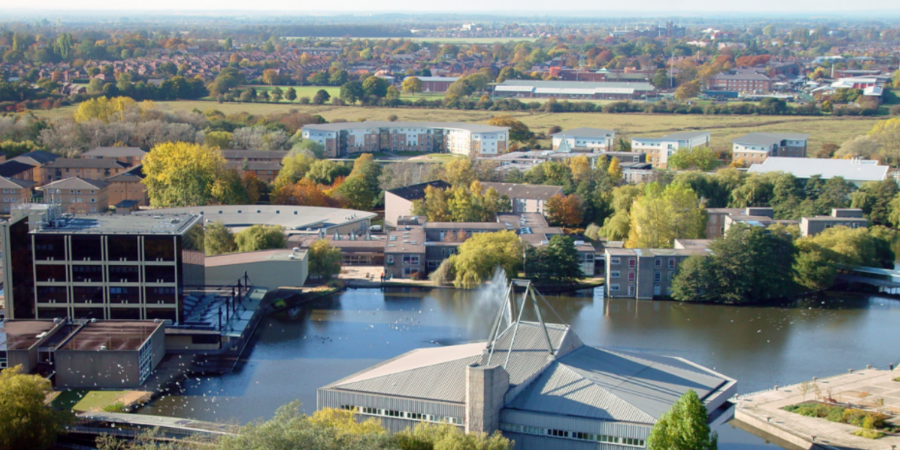
The university has an excellent location, as if the campuses are located in the middle of a nature reserve. It turned out to be easier to get there than it seemed at first: by train - about 15 minutes from Newcastle station, by car - 30-40 minutes. Very rich student life and excellent teachers. Beautiful views from anywhere on campus.
Read in fullOverall, a good university, there are many clubs and societies you can join, and many resources for students. For the first time I went to the university for a semester under an exchange program with our Moscow university. Of course, the first visit is a complete delight. Student life here is very active and is considered no less important than good academic results. It seems to me that Durham is one of the few universities in England where students have the opportunity to develop so actively and at the same time achieve very good results in their studies. The staff and faculty are generally excellent and willing to help with any problems you have. As a result, I returned to Durham after graduating from my Russian university and am now studying for a master's degree in linguistics. I highly recommend this university.
Read in fullOne of the best universities in England. The curriculum is comprehensive and well-structured. I graduated with a bachelor's degree in biology 3 years ago and still remember my teachers and my rich and boring student life with gratitude. The first course was especially beautiful. We had very original freshman events, thanks to which I quickly joined the team and found like-minded people). Well, in general, a very beautiful and romantic place, especially evening sunsets. Homework is asked a lot, it's true, but we found time for everything)
Read in fullIn Durham, my daughter was enrolled in a bachelor's degree program in political science. We knew about the university for a long time, plus it was recommended by teachers at the English school where our daughter studied. With AAB results and good recommendations from teachers, my daughter entered the university without any problems. We went to see her 5 times during her studies there (3 years). The university makes a very strong impression and looks like a castle. The dormitories there are also strikingly different from what we call dormitories for students. She lived in the residence of St. Jos for all three years, there are very good conditions, but you need to book it in advance. Of course, with her specialty, there were difficulties with finding a job after graduation. And here we are very grateful to the university professor, who recommended her to consider the position of political analyst in publications. Now she works in the European edition.
Read in full